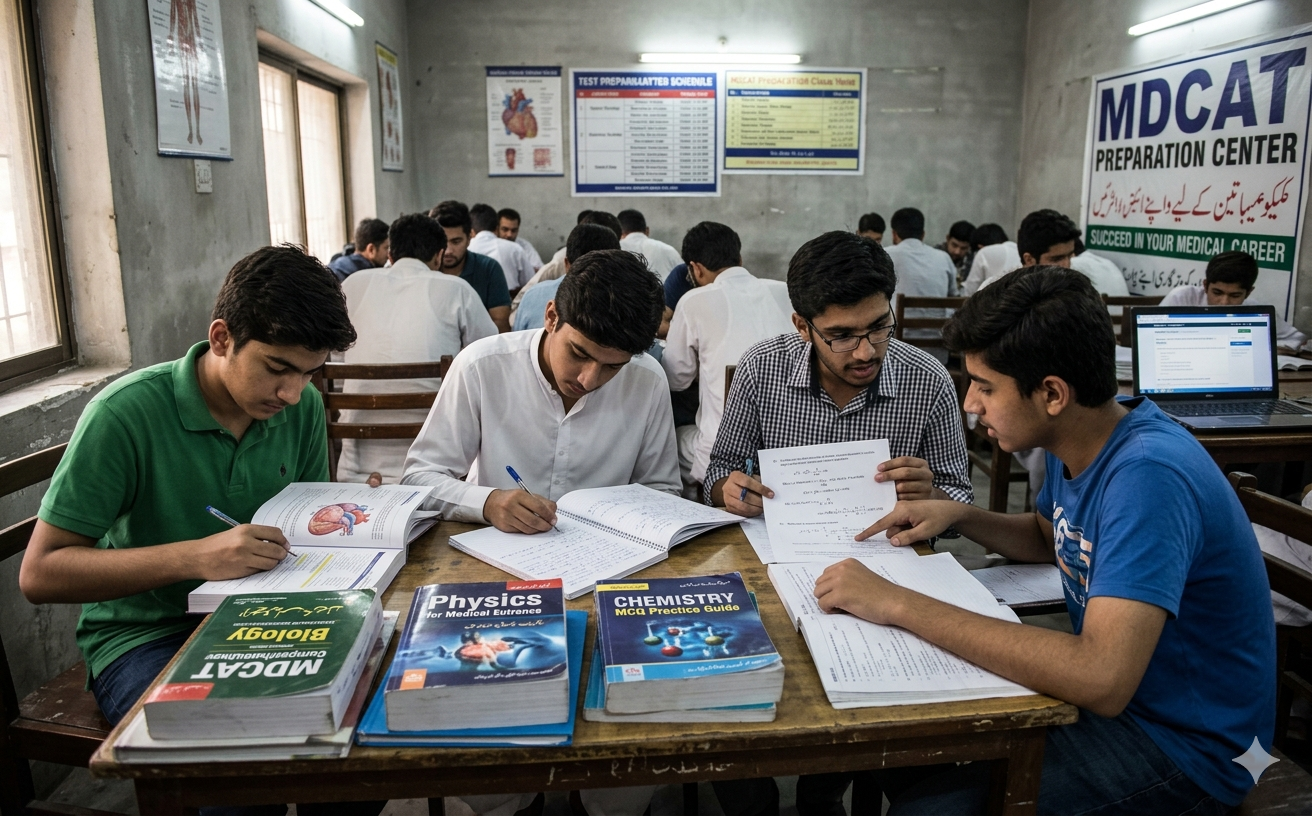
MDCAT Preparation For Students In Pakistan for Medical College Success
The Medical and Dental College Admission Test (MDCAT) is one of the most important examinations for students who dream of becoming doctors or dentists in Pakistan. Every year, thousands of students compete for limited seats in medical and dental colleges across the country. Achieving a high score requires dedication, proper planning, and consistent effort.
Students often feel overwhelmed because of the vast syllabus and tough competition. However, with the right study strategy and guidance, it is possible to secure excellent marks and gain admission to a reputable institution. This guide provides practical tips and proven techniques to help students prepare effectively and confidently.
Understanding the Importance of MDCAT
MDCAT serves as the primary entrance examination for admission to medical and dental colleges in Pakistan. The test evaluates students’ knowledge in Biology, Chemistry, Physics, English, and Logical Reasoning.
A strong MDCAT score significantly increases the chances of securing admission to top medical institutions. Since merit is usually very high, students must focus on achieving the best possible results. Understanding the importance of the MDCAT Preparation For Students In Pakistan motivates students to take their preparation seriously from the beginning.
Know the MDCAT Syllabus Thoroughly
Before starting preparation, students should carefully review the official MDCAT syllabus. Knowing what topics are included helps in creating a focused study plan and prevents wasting time on irrelevant material.
The syllabus generally covers concepts from FSc Pre-Medical or equivalent qualifications. Biology often carries the highest weightage, making it a crucial subject for students aiming for top scores. Understanding topic distribution allows students to allocate study time more effectively.
Create a Realistic Study Plan
A well-structured study plan is essential for successful preparation. Students should divide the syllabus into manageable sections and assign specific topics to each day or week.
A realistic timetable should include study hours, revision sessions, practice tests, and short breaks. Consistency is more effective than studying for long hours occasionally. Following a schedule regularly helps maintain progress and reduces last-minute stress.
Students should also leave enough time for revision because reviewing previously studied topics improves long-term retention and understanding.
Focus on Biology as a Priority Subject
Biology is often considered the most important section of MDCAT because it contains a significant number of questions. Students should spend extra time mastering biological concepts, diagrams, and terminology.
Instead of memorizing information without understanding, students should focus on learning the underlying concepts. Conceptual understanding makes it easier to solve tricky questions and remember information during the exam.
Regular practice of Biology MCQs can help identify weak areas and improve accuracy. Students should revise important chapters repeatedly to strengthen their command of the subject.
Strengthen Chemistry Concepts
Chemistry requires both conceptual understanding and memorization. Topics such as organic chemistry, chemical reactions, periodic trends, and stoichiometry frequently appear in MDCAT.
Students should create concise notes containing important formulas, reactions, and definitions. These notes become valuable revision tools during the final weeks before the exam.
Practicing MCQs regularly helps students become familiar with common question patterns and improves their ability to solve problems quickly under exam conditions.
Improve Performance in Physics
Many students find Physics challenging because it involves calculations, formulas, and conceptual reasoning. However, consistent practice can significantly improve performance.
Students should understand the derivation and application of formulas rather than simply memorizing them. Solving numerical problems daily helps build confidence and speed.
Creating a formula sheet for quick revision can be highly beneficial. Reviewing this sheet frequently helps students remember important equations and concepts throughout their preparation period.
Develop Strong English Skills
The English section tests grammar, vocabulary, sentence structure, and comprehension skills. While many students focus heavily on science subjects, English should not be ignored.
Reading newspapers, educational articles, and books can improve vocabulary and comprehension. Students should also practice grammar exercises regularly to strengthen their language skills.
Learning commonly tested vocabulary words and understanding sentence correction techniques can lead to noticeable improvements in English scores.
Prepare for Logical Reasoning Questions
Logical Reasoning evaluates analytical thinking and problem-solving abilities. Many students underestimate this section, but it can contribute valuable marks to the overall score.
Students should practice reasoning questions from past papers and MDCAT preparation books. Familiarity with different question types improves speed and accuracy.
Consistent practice helps students recognize patterns and develop strategies for solving reasoning problems efficiently during the exam.
Use Quality Study Resources
Selecting the right study materials plays a major role in effective preparation. Students should rely on authentic textbooks, reputable MDCAT preparation guides, and verified practice materials.
Using too many books can create confusion and waste valuable time. Instead, students should focus on mastering a limited number of high-quality resources.
Online lectures, educational videos, and digital learning platforms can also supplement traditional study methods and provide additional explanations for difficult topics.
Practice MCQs Every Day
MCQs form the foundation of MDCAT. Daily practice helps students become comfortable with the exam format and improves their ability to identify correct answers quickly.
Students should set a target number of MCQs to solve each day. Reviewing incorrect answers is equally important because it helps identify mistakes and prevents repeating them in future tests.
Regular MCQ practice strengthens concepts, improves time management, and builds confidence for the actual examination.
Attempt Full-Length Mock Tests
Mock tests simulate real exam conditions and provide valuable insights into performance levels. Students should attempt full-length tests regularly, especially during the final months of preparation.
These tests help evaluate strengths and weaknesses, allowing students to adjust their study strategies accordingly. They also improve concentration and stamina, which are essential for performing well during a lengthy examination.
Analyzing test results carefully enables students to focus on areas requiring additional attention and improvement.
Master Time Management Skills
Time management is critical both during preparation and on exam day. Students should learn to allocate study hours effectively and avoid spending excessive time on a single topic.
During practice tests, students should develop strategies for answering questions within the allotted time. Learning when to skip difficult questions and return to them later can improve overall performance.
Efficient time management reduces stress and ensures that all sections of the exam receive adequate attention.
Maintain Consistency and Discipline
Success in MDCAT is often determined by consistency rather than intelligence alone. Students who study regularly over several months generally perform better than those who rely on last-minute cramming.
Maintaining discipline requires setting clear goals and staying committed to daily study routines. Small improvements made consistently over time can lead to significant progress.
Students should track their achievements and celebrate milestones to stay motivated throughout the preparation journey.
Manage Stress and Stay Healthy
Academic pressure can affect both physical and mental well-being. Students should prioritize their health by maintaining a balanced lifestyle during preparation.
Adequate sleep, regular exercise, and healthy nutrition contribute to better concentration and memory. Taking short breaks between study sessions can prevent burnout and improve productivity.
Positive thinking and self-confidence also play important roles in exam success. Students should focus on progress rather than comparing themselves with others.
Final Revision Before the Exam
The last few weeks before MDCAT should be dedicated primarily to revision. Students should review important concepts, formulas, notes, and previously attempted questions.
Instead of starting entirely new topics, the focus should remain on strengthening existing knowledge. Revising high-yield chapters multiple times improves retention and confidence.
Practice tests during this phase help maintain exam readiness and ensure that students remain familiar with the test format.
Conclusion
MDCAT is a challenging but achievable milestone for aspiring medical students in Pakistan. Success depends on a combination of smart planning, conceptual understanding, regular practice, and unwavering determination. Students who follow a structured study plan, practice MCQs consistently, revise thoroughly, and maintain a healthy lifestyle can significantly improve their chances of securing high scores.
Effective MDCAT Preparation For Students In Pakistan requires patience, dedication, and a commitment to continuous improvement. With the right approach and consistent effort, students can move closer to achieving their dream of entering a medical or dental college and building a successful healthcare career.