Why Choose Hair Transplant in Islamabad for Better Hair
Hair loss can affect appearance, confidence, and everyday comfort. A careful assessment is especially important when thinning is diffuse, because preserving donor follicles and existing native hair can significantly influence both present appearance and future treatment options. Modern restoration techniques can help suitable candidates regain a fuller, natural-looking appearance by moving healthy follicles from one area to another. Choosing the right clinic and understanding the process are essential because results depend on diagnosis, planning, surgical technique, and aftercare.
Understanding Hair Loss and Restoration
Hair loss can happen for many reasons, including hereditary pattern baldness, hormonal changes, aging, nutritional deficiencies, stress, certain medicines, and scalp conditions. A qualified hair specialist should first determine the likely cause before recommending surgery. This evaluation helps distinguish permanent follicle loss from temporary shedding that may respond better to medical treatment or lifestyle changes.
Hair Transplant in Islamabad is primarily designed for people who have sufficient healthy donor hair and stable areas of thinning or baldness. It is not a universal solution for every type of hair loss. During consultation, the specialist may assess hair density, scalp health, family history, hairline position, and the expected progression of future loss.
Why Hair Transplant in Islamabad Is Popular
For many patients, Hair Transplant in Islamabad offers access to modern restoration procedures, experienced practitioners, and clinics that focus on individualized treatment. The city has become a destination for people seeking solutions for receding hairlines, thinning crowns, and other forms of pattern hair loss. Patients can compare treatment approaches, clinic facilities, surgeon experience, and follow-up services before making a decision.
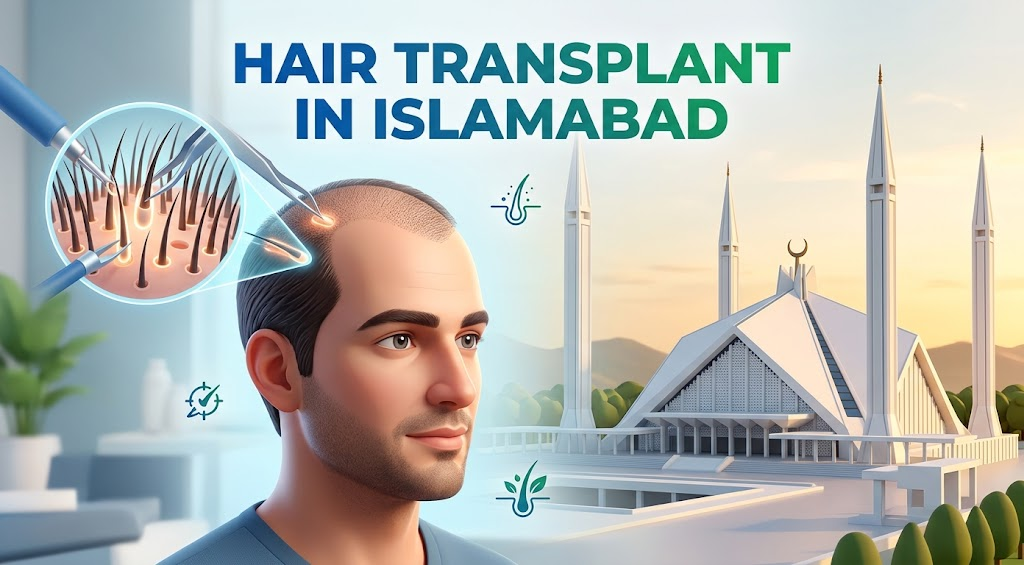
Another advantage is the availability of different follicular techniques. Follicular Unit Extraction, commonly called FUE, involves removing individual follicular units from the donor region and placing them into carefully prepared recipient sites. Follicular Unit Transplantation, or FUT, removes a strip of donor tissue before separating it into grafts. The appropriate technique depends on the patient’s hair characteristics, donor supply, goals, and clinical assessment.
What Happens During the Procedure
The Hair Transplant in Islamabad process generally begins with consultation and planning. The surgeon examines the scalp, discusses expectations, and designs a hairline that fits facial proportions and long-term needs. Photographs and measurements may be taken to guide graft distribution. This stage establishes a practical plan for the procedure and helps align treatment with the patient’s individual goals.
On treatment day, the scalp is prepared and local anesthesia is commonly used to minimize discomfort. Grafts are then harvested from the donor region and sorted carefully. Recipient sites are created according to the planned angle, direction, and density. Finally, the grafts are placed into these sites with attention to natural growth patterns.
Choosing the Right Clinic
Selecting a provider is one of the most important decisions in Hair Transplant in Islamabad. Patients should look beyond promotional claims and focus on qualifications, relevant surgical experience, facility standards, consultation quality, and transparent communication. Ask who performs each stage of the procedure and whether the surgeon personally evaluates the patient and designs the treatment plan.
A trustworthy clinic should explain potential benefits, limitations, risks, expected recovery, and possible future sessions without promising unrealistic perfection. Clear pricing should identify what is included, such as consultation, procedure, medicines, follow-up visits, and aftercare instructions. Reviewing authentic patient outcomes can also help people understand what may realistically be achieved.
Preparing Before Treatment
Good preparation can support a smoother experience. Follow the clinic’s instructions regarding medications, smoking, alcohol, supplements, hair washing, and physical activity. Do not stop prescribed medicines without professional advice. Patients should also arrange transportation if sedation or medication could affect alertness and keep their schedule relatively flexible during the first recovery period.
Before committing to surgery, patients should understand that transplanted hair does not create unlimited density. The donor area is a finite resource, so careful graft planning matters. A conservative, well-designed hairline may provide a more sustainable appearance than an aggressively low hairline requiring excessive grafts.
Recovery and Aftercare
After Hair Transplant in Islamabad, mild redness, swelling, tenderness, or small scabs can occur. Patients should follow individualized washing and medication instructions and avoid scratching or unnecessarily touching newly implanted grafts.
Temporary shedding of transplanted hairs can occur during the early phase. This can be alarming, but it does not necessarily mean the follicles have failed. New growth develops gradually because hair follicles follow a natural growth cycle. Early visible changes may appear after several months, while fuller results commonly take longer. Regular follow-up allows the clinic to monitor healing and address concerns.
Expected Results and Realistic Goals
A successful procedure should aim for natural-looking improvement rather than an artificial increase in density. The final appearance depends on donor quality, graft survival, existing hair, scalp characteristics, age, genetics, and ongoing hair loss. Some patients may require additional treatment later if native hair continues to thin.
Patients considering Hair Transplant in Islamabad should therefore evaluate outcomes over the long term. A well-planned restoration can frame the face, improve coverage, and make styling easier, but it cannot guarantee the exact density of naturally occurring hair. Discussing realistic expectations before surgery is one of the best ways to improve satisfaction.
Costs and Factors That Affect Pricing
The price of hair restoration can differ considerably between clinics and patients. Important factors include the number of grafts required, technique used, surgeon involvement, clinic facilities, and the complexity of the case. Some clinics charge by graft, while others offer packages. Comparing prices alone can be misleading because a cheaper procedure may not provide the same level of planning, expertise, or follow-up.
Ask for a written treatment estimate and clarify whether consultation, laboratory testing when necessary, medications, post-procedure products, and follow-up appointments are included. A transparent financial discussion helps prevent unexpected costs and allows patients to compare services fairly.
Risks and Important Considerations
Hair restoration is a medical procedure, so it carries potential risks. These may include infection, bleeding, scarring, temporary numbness, swelling, poor graft growth, uneven density, or an unnatural hairline. The likelihood and severity of complications vary. Choosing a qualified medical professional and following aftercare instructions can help reduce avoidable problems.
Patients should also be cautious about guarantees of permanent, perfectly dense hair. A responsible specialist explains uncertainty and discusses what can realistically be achieved with the available donor supply. If a clinic pressures someone to book immediately or avoids questions about qualifications and risks, seeking another consultation is sensible.
Why Professional Consultation Matters
A consultation is more than a quick discussion about price. It gives the specialist an opportunity to identify the cause of hair loss, determine candidacy, estimate graft requirements, and discuss appropriate techniques. It also gives the patient a chance to ask detailed questions about the surgeon, recovery, expected timeline, and long-term strategy.
For anyone considering Hair Transplant in Islamabad, researching carefully and comparing qualified providers can make the decision more informed. Look for evidence-based recommendations, individualized planning, realistic communication, and structured follow-up rather than relying solely on advertisements or discounted packages.
Final Thoughts
Hair restoration can be a valuable option for people experiencing permanent pattern hair loss, but the best results begin with appropriate patient selection and thoughtful planning. Understanding the causes of hair loss, comparing techniques, choosing a qualified provider, and following aftercare instructions all contribute to a safer and more satisfying experience.
The goal should always be natural improvement that suits the individual’s facial features and future hair pattern. With realistic expectations and professional guidance, Hair Transplant in Islamabad can become part of a carefully planned approach to restoring coverage and confidence. A thorough consultation is the right starting point for deciding whether the procedure is suitable and what outcome may reasonably be expected.